Neurofeedback for Cognitive Aging and Neurodegenerative Conditions
EEG neurofeedback is an active and growing research area for memory, executive function, and movement initiation in cognitive aging, MCI, and Parkinson’s disease.
20+ years
of EEG NF research in cognitive aging
RCT-supported
memory and executive-function gains in MCI
1-year gains
sustained EEG and cognitive change at follow-up
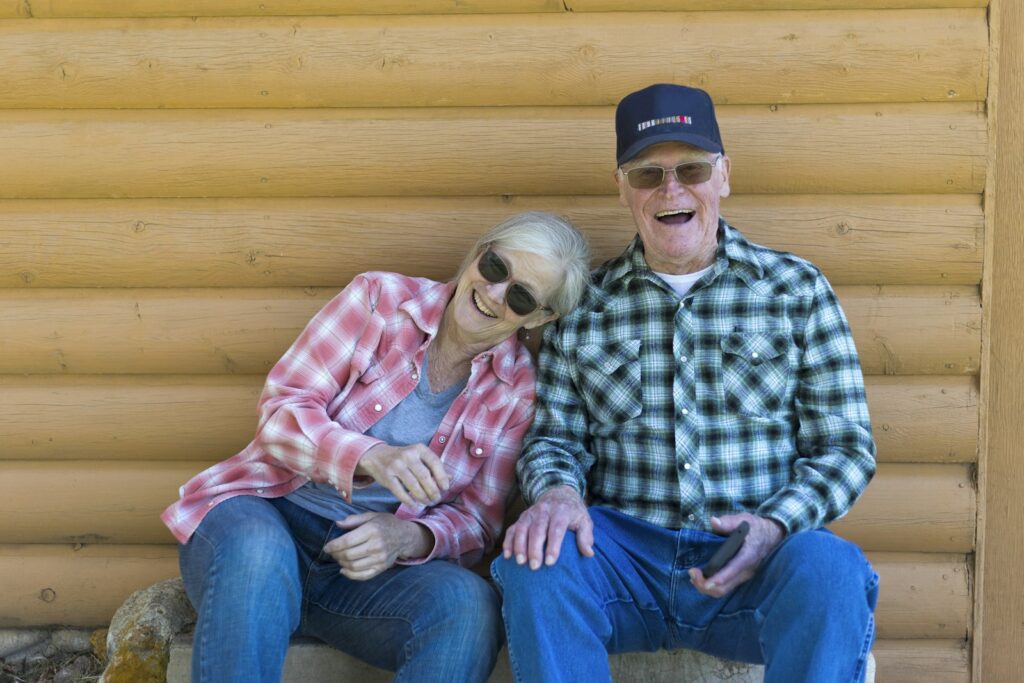
EEG neurofeedback for cognitive aging is a younger but rapidly growing research area. Foundational work since the 2000s by Angelakis, Wang, Becerra, and others has shown that older adults can train upper-alpha and SMR rhythms with measurable cognitive benefit. Recent randomized sham-controlled trials in mild cognitive impairment (MCI) confirm gains in memory and executive function, and small Parkinson’s pilots show feasibility for movement-related EEG protocols.
What the Research Shows
EEG neurofeedback in older adults and people with mild cognitive impairment produces measurable improvements in memory, executive function, and EEG profiles, with several sham-controlled RCTs confirming the basic finding. One 2022 trial showed EEG and executive-function gains sustained at one-year follow-up. The field is younger and pilot-heavy compared to ADHD or PTSD, but the direction of effect is consistent across multiple research groups.
How EEG Neurofeedback Addresses Cognitive Aging
Aging brains often show characteristic EEG changes – increased theta activity, reduced upper alpha and beta – that correlate with cognitive performance. EEG neurofeedback trains the brain to shift those bands in directions associated with better attention and memory. Protocols studied for older adults and MCI include upper-alpha up-training (Angelakis, Wang), theta down-training (Becerra), sensorimotor rhythm reinforcement, and gamma-band training for memory binding. For Parkinson’s disease, mu-suppression EEG protocols have been explored to improve movement initiation.
Foundational Research
The cognitive-aging neurofeedback canon – cited in the ISNR Comprehensive Bibliography – establishes that older brains can learn EEG self-regulation and that this learning produces cognitive benefit.
Angelakis et al., 2007 – upper-alpha NF improves cognition in older adults
Clinical Neuropsychologist, 21(1): 110-129.
Foundational study showing healthy older adults could successfully train upper-alpha activity, with parallel gains in executive function and processing speed. Established the basic feasibility of EEG NF in aging populations. DOI: 10.1080/13854040600744839 | PMID 17366280
Wang & Hsieh, 2013 – upper-alpha EEG NF and working memory in older adults
PLoS ONE, 8(5): e62750.
Older adults trained upper-alpha rhythms across 12 sessions, with significant working-memory gains versus controls. Provides clean evidence that NF-driven EEG change translates to cognitive performance in healthy aging. DOI: 10.1371/journal.pone.0062750 | PMID 23690951
Becerra et al., 2012 – frontal theta NF improves cognition in MCI
Clinical EEG and Neuroscience, 43(1): 48-56.
Older adults with mild cognitive impairment completed an EEG NF protocol targeting excessive frontal theta. Significant EEG normalization and cognitive gains versus controls. An early-MCI clinical study supporting EEG neurofeedback as a viable cognitive-aging intervention. DOI: 10.1177/1550059411429531 | PMID 22423552
Trambaiolli et al., 2021 – systematic review of NF in cognitive aging
Frontiers in Aging Neuroscience, 13: 682683.
Systematic review of 10 EEG neurofeedback studies in cognitive aging confirms a consistent direction of effect on memory and executive function across older-adult and MCI populations, while flagging the field as still developing. DOI: 10.3389/fnagi.2021.682683 | PMID 34177558
Recent Randomized Trials
Modern sham-controlled RCTs are extending the foundational findings into clinical MCI and Parkinson’s populations.
Lavy et al., 2021 – upper-alpha EEG NF in MCI (sham-controlled RCT)
Frontiers in Aging Neuroscience, 13: 657646.
Randomized sham-controlled EEG neurofeedback trial in patients with MCI. The experimental group showed significant memory improvement versus sham, sustained at one-month follow-up. Among the better-designed MCI neurofeedback trials. DOI: 10.3389/fnagi.2021.657646 | PMID 34194315
Alatorre-Cruz et al., 2022 – theta-reduction NF in older adults (1-year follow-up)
Journal of Alzheimer’s Disease, 85(4): 1767-1781.
Sham-controlled EEG neurofeedback RCT with one-year follow-up. EEG changes (theta decrease, beta increase) and executive-function gains became significant at one year in the experimental group only – rare and important long-term follow-up data showing durability. DOI: 10.3233/JAD-215538 | PMID 34974435
Andrade et al., 2024 – gamma-band EEG NF in elderly with subjective memory complaints
Journal of Integrative Neuroscience, 23(3): 67.
Double-blind sham-controlled EEG neurofeedback trial showing successful gamma-synchrony self-modulation versus sham in healthy elderly. Demonstrates EEG learnability in aging brains and the technical readiness of gamma-band protocols for future clinical trials in MCI. DOI: 10.31083/j.jin2303067 | PMID 38538229
Cooke et al., 2024 – home-based EEG NF in Parkinson’s disease (feasibility)
Neurophysiologie Clinique, 54(5): 102997.
Home-based mu-suppression EEG neurofeedback in 16 Parkinson’s patients before precision handgrip. Movement initiation time improved (628 ms to 564 ms off-medication). Well-tolerated at home, supporting feasibility of remote NF in movement disorders. DOI: 10.1016/j.neucli.2024.102997 | PMID 38991470
Why Neurofeedback Often Appeals to Adults Concerned About Cognition
- Non-pharmacological. No medications, no side effects – especially valuable for older adults with polypharmacy concerns.
- Skill-based. Patients learn EEG self-regulation that has been shown to persist at one-year follow-up.
- Targets the right systems. Trains the EEG bands most strongly correlated with attention, memory, and processing speed.
- Feasible at home. Recent feasibility trials show home-based EEG NF is well-tolerated even in Parkinson’s.
- Compatible with everything else. Pairs naturally with cognitive training, exercise, and brain-health lifestyle work.
A Few Honest Caveats
- Cognitive aging neurofeedback is a younger field than ADHD or PTSD; most trials are small and pilot-scale.
- There is no evidence that EEG NF prevents dementia or modifies disease progression in established Alzheimer’s.
- Parkinson’s motor-symptom evidence is feasibility-level so far, not efficacy-level.
- Best framed as part of a broader brain-health plan including exercise, sleep, social engagement, and cognitive training.
Is Neurofeedback Right for You or Your Loved One?
For mild cognitive impairment or subjective cognitive complaints in healthy aging, EEG neurofeedback is one of the most actively studied non-pharmacological options – with multiple sham-controlled trials showing memory and executive-function gains and at least one trial showing benefits sustained at one year. It is best considered as part of a comprehensive brain-health plan, ideally in collaboration with a neurologist or geriatric specialist for those with diagnosed conditions.
Want to Dig Deeper Into the Research?
The International Society for Neuroregulation & Research (ISNR) maintains the comprehensive bibliography of peer-reviewed neurofeedback studies across conditions.
Last reviewed: April 2026. This page is for general information and does not constitute medical advice. Always speak with a qualified clinician about your treatment options.