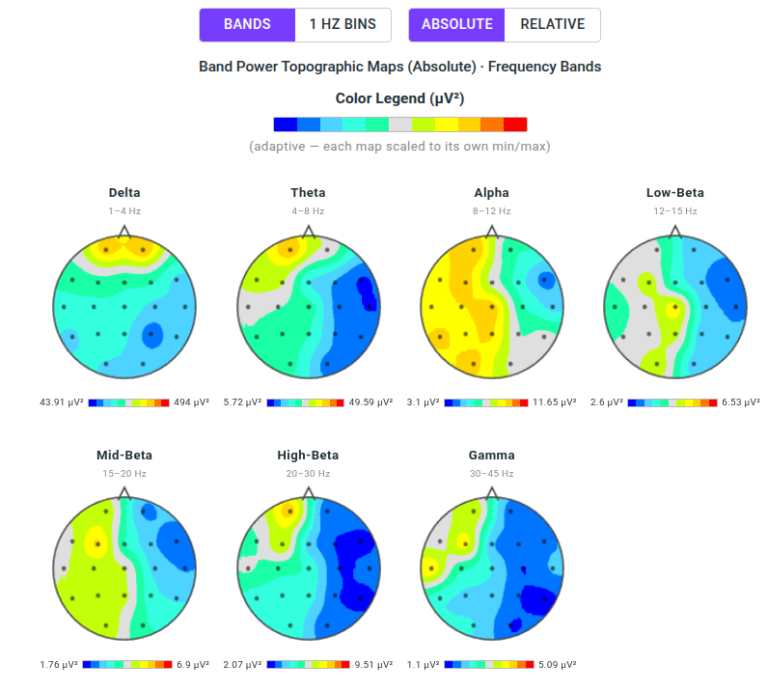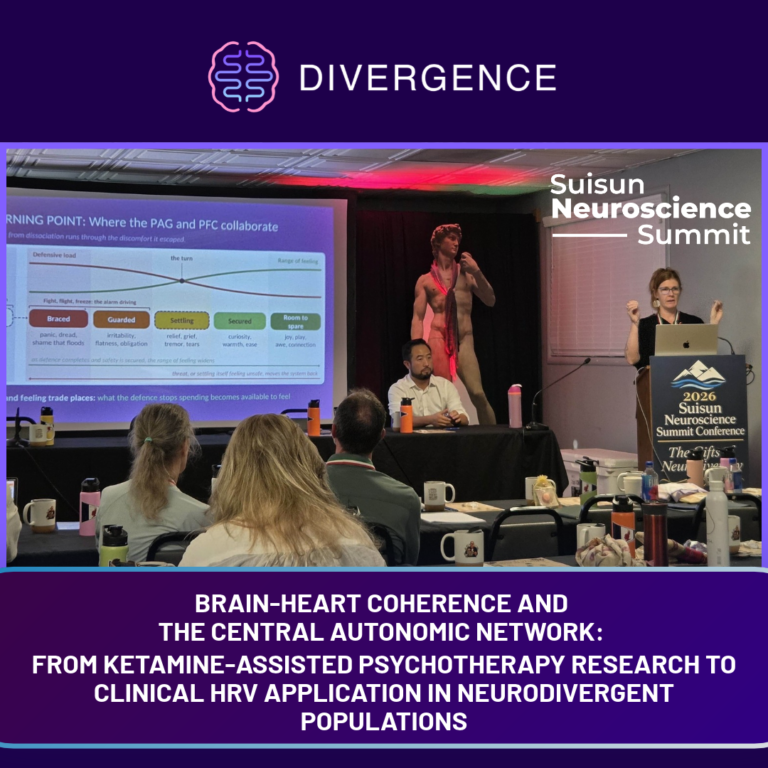
Suisun NeuroScience Summit - 2026 - Brain-Heart Coherence and the Central Autonomic Network: From Ketamine-Assisted Psychotherapy Research to Clinical HRV Application in Neurodivergent Populations

How Brain-Heart Coherence Connects EEG and HRV in Clinical Practice

Brain-heart coherence describes the relationship between neural activity and autonomic regulation. The central autonomic network (CAN), a distributed system involving the prefrontal cortex, anterior cingulate cortex, insula, amygdala, hypothalamus, and brainstem, contributes to the integration of emotional, cognitive, and autonomic processes (Lamotte et al., 2021). EEG and heart rate variability (HRV) provide complementary perspectives on […]
6 Years of Neurotechnology Innovation

Six Years in the 6ix: Looking Back, Building Forward

Six years ago, we started Divergence Neuro in Toronto with a fairly simple idea, to make high-quality neurofeedback more accessible, more flexible and easier for clinicians to deliver. We had no idea exactly where that idea would take us, but we knew there was an opportunity to rethink how practitioners could use modern technologies to […]

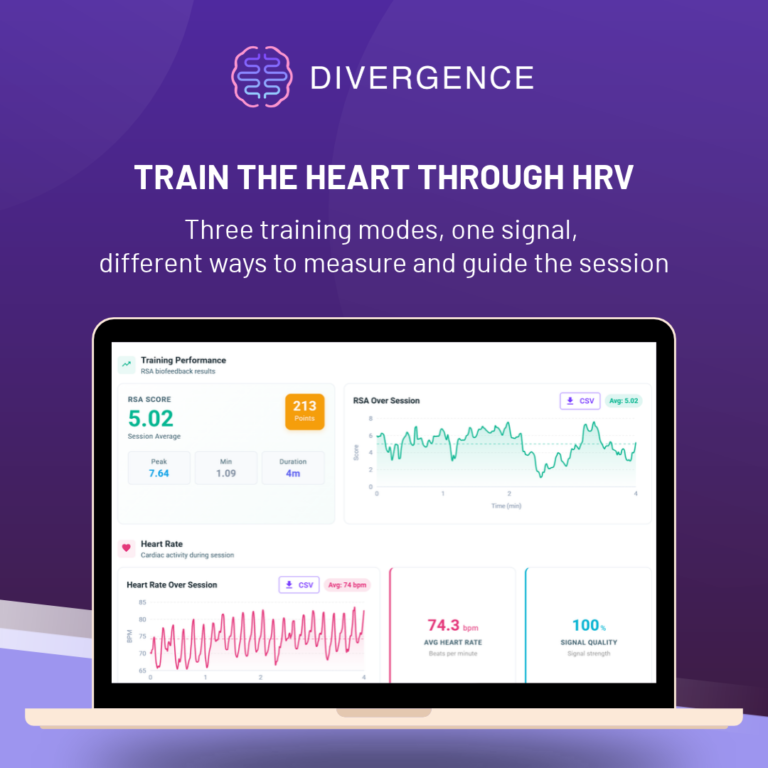
Train the Heart Through HRV - Three training modes, one signal, different ways to measure and guide the session

Three Ways to Train the Heart

Training using the heart beat patterns has become increasingly popular in recent years. There is a great deal of research that backs the efficacy of such training in a variety of wellness scenarios. In this blog article, I’ll review the various methods / modes for training using heart rate variability (HRV) on the Divergence Platform. […]

Advancing Equitable Mental Health Care Through Clinical Innovation

Beyond Awareness: Why Neurotechnology and Trauma-Informed, Culturally Sensitive Practice are the Future of Equitable Mental Health

A Collaborative Insight from Divergence Neuro and Becoming Institute Inc. July marks National Minority Mental Health Awareness Month: a vital observance that brings the ongoing need for equitable mental health care to the forefront of clinical and policy discussions. In this special feature, Divergence Neuro and Becoming Institute Inc. have partnered to explore how the […]

Neurofeedback and Biofeedback Approaches for Supporting Caregiver Wellness

How Does Caregiver Burnout Affect Stress, Recovery, and Brain Health?

Every June, Alzheimer’s & Brain Awareness Month brings attention to dementia research, cognitive health and the millions of individuals living with Alzheimer’s disease and related conditions. Equally important are the family members and caregivers who provide daily support, often balancing complex responsibilities that can continue for years. As dementia progresses, caregivers frequently take on an […]

Neurophysiological Regulation in Trauma Care

Neurofeedback for Trauma: How Brain Training Supports PTSD and TBI Recovery

Trauma-informed care increasingly recognizes that the effects of trauma extend beyond psychological experience into measurable changes in neural function. Alterations in brain regions involved in arousal, emotional processing, and executive control, including the amygdala, prefrontal cortex, and hippocampus, have been consistently observed in individuals exposed to chronic stress or trauma (van der Kolk, 2014). In […]

Why HRV Biofeedback Is Reshaping Brain and Body Training

The Signal Beneath the Waves

Most clinicians can already see when a client is showing signs of dysregulation. They watch the breath go shallow, the shoulders hunch, the eyes flatten. The harder problem is showing the client what you see, and then giving them a way to change these reactions in real time. That is the gap heart rate variability […]

Biofeedback for Sports Performance Optimization

Multimodal Respiratory Biofeedback in Athletic Training

Advances in biofeedback technology are expanding the way clinicians assess and train physiological regulation in athletes. In high-performance environments, the ability to monitor and influence autonomic processes such as respiration, heart rate variability, and arousal states is increasingly recognized as a competitive advantage. Respiratory biofeedback, in particular, provides a direct and accessible pathway to modulate […]

Neurofeedback and Photobiomodulation Clinical Research Technology and Industry Trends

One in five adults lives with a mental health condition. Traumatic brain injury affects tens of millions annually. Cognitive decline is a growing health challenge in aging populations. For decades, brain health treatments have operated largely on self-report: patients describe how they feel, and clinicians adjust accordingly. Clinicians have had limited access to objective measures […]

Multimodal Neurofeedback for Heart and Brain Regulation

Neurofeedback and Biofeedback for Heart-Brain Integration

Understanding the dynamic interplay between the heart and brain is increasingly important for clinicians using neurofeedback and biofeedback. Research demonstrates that simultaneous monitoring of neural and cardiac activity provides actionable insights into self-regulation, autonomic balance, and functional neurological connectivity. By leveraging multimodal approaches that combine EEG with ECG-based measures of heart rate variability (HRV), clinicians […]

Discover How Neurofeedback Is Transforming Clinical Practice in 2026

The Evolving Role of Neurofeedback in Practice in 2026

Neurofeedback has been part of the clinical landscape for decades, but its applications today look very different from just a few years ago. Advances in technology, cloud-based monitoring, and integration with multi-modal biofeedback have made neurofeedback more flexible and scalable, allowing clinicians to incorporate it alongside existing therapeutic and coaching approaches. These developments are reshaping […]

Multi-User Management for Modern Neurofeedback Clinics

Multi-User Management in Remote Neurofeedback and Biofeedback Practices

Digital platforms are increasingly central to delivering personalized neurofeedback and biofeedback care, enabling clinicians, psychotherapists, and coaches to monitor client progress, analyze physiological data, and maintain compliance in secure, scalable ways. As clinical teams grow and responsibilities diversify, systems that provide structured multi-user management have become essential for distributing tasks, protecting sensitive information, and improving […]

Neurofeedback Insights for Seasonal Depression

Supporting Clients with Seasonal Depression

Seasonal affective disorder (SAD), commonly called seasonal depression, is a recurrent depressive pattern that typically begins in fall and continues through winter months for many patients. Studies indicate that up to 10% of individuals who live in northern latitudes experience clinically significant symptoms, with even higher rates of subclinical seasonal mood changes (Melrose, 2015). Clinicians, […]

Training Brain–Heart Coherence with EEG and HRV

Training Brain–Heart Coherence with EEG and HRV

When The Brain and Heart Learn Together with Biofeedback In the last few years, the science of mind-body connection has evolved beyond just a slogan. We now have measurable, quantifiable ways to observe how the brain and heart coordinate their rhythms to create what we call adaptive resilience – the ability to stay calm under […]