The World Health Organization states that over 1 in 3 people are affected by neurological conditions (WHO, 2024). At the same time, clinicians and researchers have access to more brain data than ever before. The challenge is no longer collecting information. Rather, it is collecting enough meaningful information to understand how the brain functions as a network.
This is one reason quantitative EEG, or qEEG, has become increasingly important. As practitioners seek objective ways to evaluate brain activity and track physiological change over time, comprehensive brain mapping continues to rely on a technology that has remained remarkably consistent for decades, the 19-channel EEG.
In an industry focused on making EEG simpler, the demand for full-scalp recordings has not disappeared. In many cases, it has grown, and the reason is straightforward. While training can occur with a handful of sensors, understanding how brain networks function requires broader coverage. As qEEG adoption continues to expand across neurofeedback, mental health, cognitive performance, and neuroscience research, access to high-quality 19-channel EEG data remains the foundation of many professional assessment workflows.
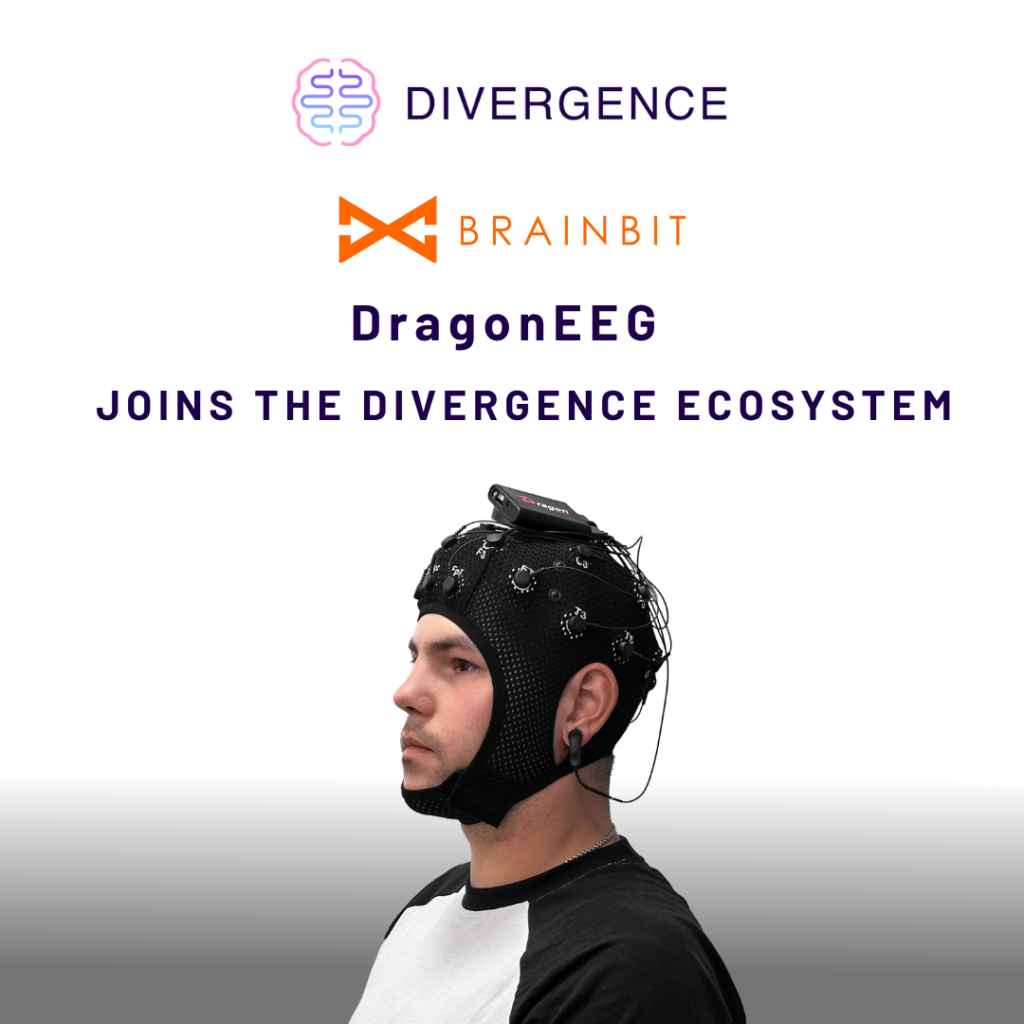
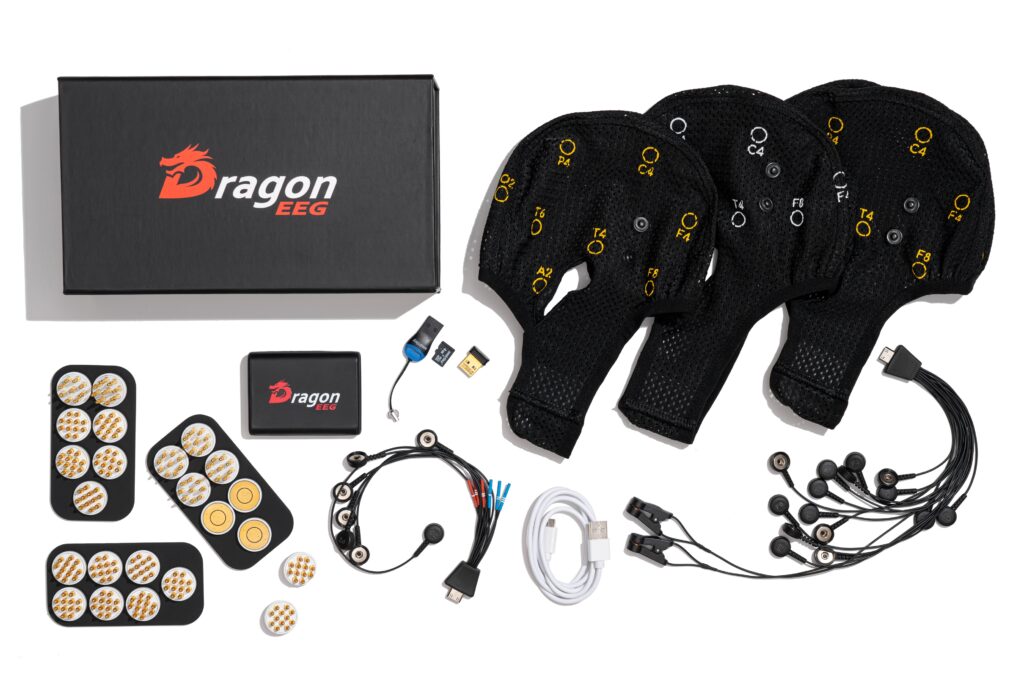
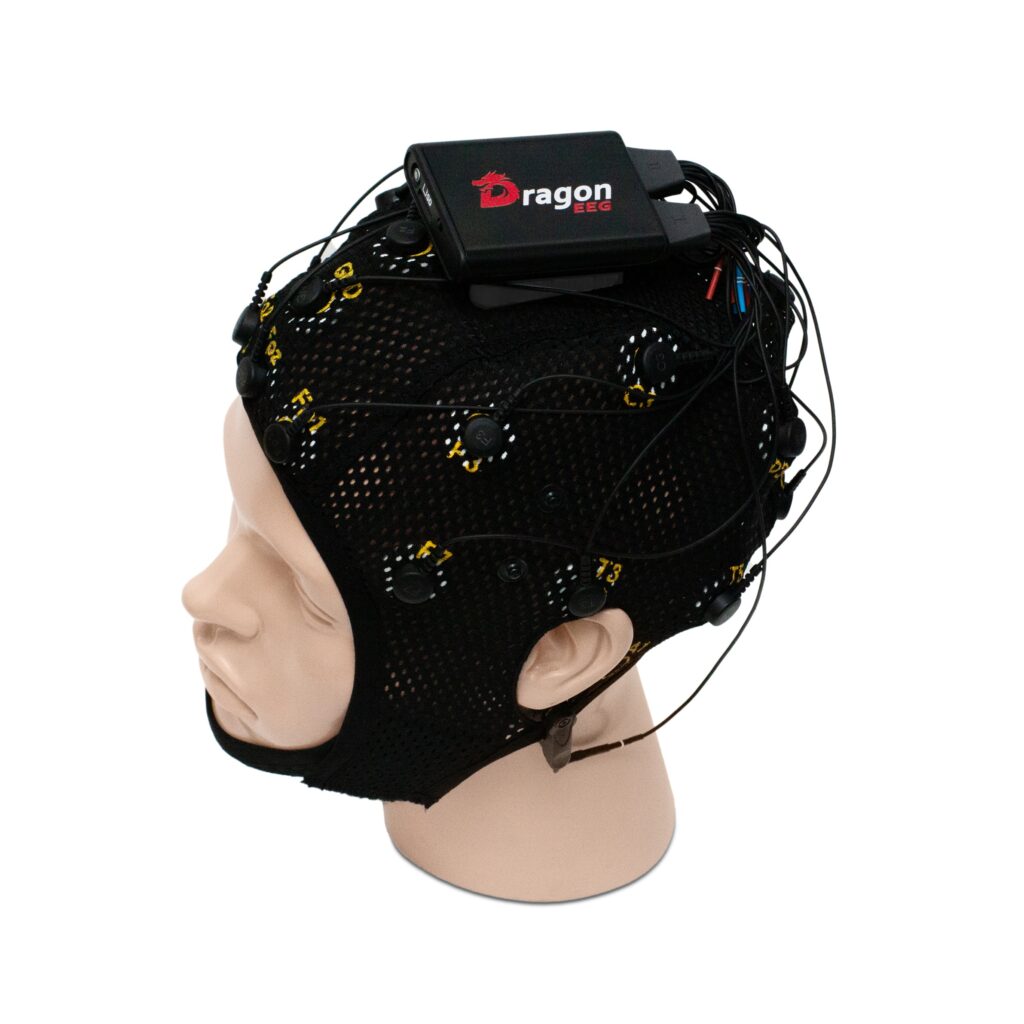
This growing demand for advanced assessment capabilities is why Divergence Neuro is introducing support for the DragonEEG, BrainBit’s flagship EEG system designed for qEEG brain mapping, neuroscience research, and professional neurotechnology development. Featuring 19 EEG channels based on the international 10-20 system, alongside dedicated EMG, ECG, and EOG poly channels, the DragonEEG provides clinicians, researchers, educators, and developers with access to research-grade EEG acquisition within the broader Divergence ecosystem.
Why Are More Practitioners Using qEEG?
The neurofeedback industry has evolved considerably over the past decade. As the field has grown, so have expectations around assessment, personalization, and measurable outcomes. Practitioners are increasingly expected to demonstrate progress using objective data rather than relying exclusively on symptom reporting or observational measures.
qEEG supports this shift by transforming raw EEG recordings into quantitative metrics that can be analyzed, visualized, and compared over time. Measures such as spectral power, coherence, asymmetry, and connectivity provide insight into how different brain regions communicate and function together (Thatcher, 2010). Rather than viewing isolated recording sites, practitioners can examine broader patterns across cortical networks and establish physiological baselines that inform future decisions.
For researchers, qEEG provides a framework for studying cognition, attention, learning, emotional regulation, meditation, and performance. For neurofeedback providers, it offers an additional layer of information that can help guide assessment and protocol planning. For educators, it creates opportunities to teach modern neuroscience methodologies using real-world physiological data.
The Difference Between Monitoring and Mapping
One of the most common misconceptions in neurotechnology is that fewer electrodes automatically represent progress. While simplified EEG systems have improved accessibility, many of the analytical methods used in qEEG were developed using full-scalp recordings.
For neurofeedback providers, it offers an additional layer of information that can help guide assessment and protocol planning (Coben & Evans, 2011). A 19-channel EEG records activity across frontal, temporal, central, parietal, and occipital regions simultaneously, providing a more complete view of cortical dynamics than lower-channel systems.
This distinction matters because the brain does not operate as a collection of isolated regions. Attention, executive function, emotional regulation, memory, and cognitive performance emerge through communication between distributed neural networks. Evaluating those networks requires broader coverage than a handful of sensors can provide.
That is why 19-channel EEG remains a common standard in qEEG assessment, research, and brain mapping despite the continued growth of consumer EEG devices.
What Problems Does the DragonEEG Solve?
Many professionals already have access to EEG technology. What they often lack is a system capable of supporting advanced assessment without introducing unnecessary complexity.
A neurofeedback clinic may require full-scalp recordings before developing individualized training plans. A university neuroscience program may need a reliable platform for teaching EEG acquisition and analysis. Researchers studying attention, cognitive workload, meditation, or performance may need access to high-quality physiological data across multiple cortical regions. Neurotechnology developers may require research-grade EEG streams that can be integrated into custom software applications.
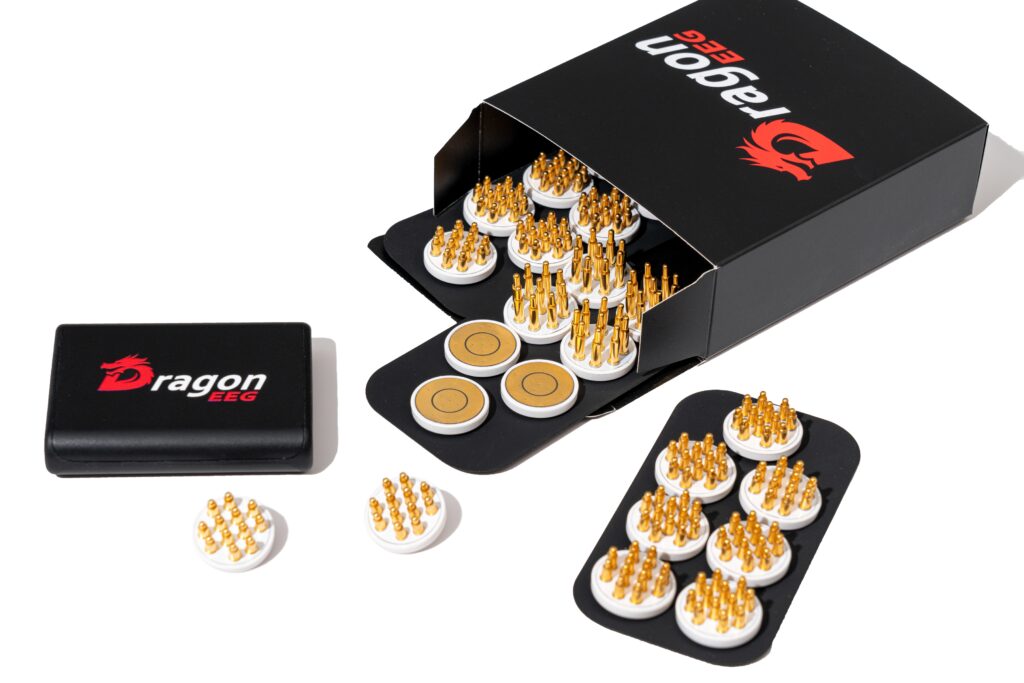
The DragonEEG was designed to address these needs. Its 19-channel configuration supports comprehensive qEEG brain mapping while maintaining compatibility with established platforms such as NeuroGuide. Wireless streaming, onboard recording, dry and wet electrode options, and cross-platform software development kits provide the flexibility required for both clinical and research environments.
Why Do Poly Channels Matter?
While the EEG channels are often the headline feature, the additional physiological channels may be equally valuable for many users.
The DragonEEG includes dedicated EMG, ECG, and EOG channels, allowing muscle activity, cardiac activity, and eye movements to be recorded alongside EEG signals. This provides important context during data collection and review.
Anyone who has worked with EEG recordings understands the challenge of artifacts. Eye blinks, jaw tension, muscle activity, and other physiological signals can influence EEG data and complicate interpretation. Simultaneously recording these signals can help identify potential sources of contamination and improve confidence in the resulting dataset.
The poly channels also support multimodal research. Investigators exploring stress, autonomic regulation, attention, or cognitive performance can examine multiple physiological systems within a single synchronized recording, creating opportunities for more comprehensive analysis.
Expanding qEEG Brain Mapping Capabilities in Divergence Neuro
The addition of the DragonEEG reflects a broader trend across neurotechnology. Assessment, training, and physiological measurement are increasingly converging into integrated workflows. Practitioners no longer want separate ecosystems for qEEG acquisition, neurofeedback, biofeedback, and progress tracking. They want tools that work together and support the full continuum from assessment to intervention.
“Practitioners today are looking for deeper insight into brain function than ever before,” says Alex Ni, CEO of Divergence Neuro. “As neurofeedback and applied neuroscience continue to evolve, access to high-quality assessment tools becomes increasingly important. Supporting the DragonEEG allows us to bring research-grade EEG acquisition and qEEG brain mapping into the broader Divergence ecosystem.”
By supporting the DragonEEG, Divergence Neuro expands access to professional-grade EEG technology for clinicians, researchers, educators, and developers seeking advanced brain mapping and assessment capabilities. Whether the goal is conducting qEEG assessments, supporting neuroscience research, teaching EEG methodology, or developing next-generation neurotechnology applications, high-quality physiological data remains the foundation for understanding how the brain functions.
FAQs About 19-Channel EEG and qEEG Brain Mapping
Q: What is a 19-channel EEG system?
A 19-channel EEG system records electrical activity across the scalp using the international 10-20 electrode placement system. It provides broad cortical coverage for qEEG analysis, brain mapping, and neuroscience research.
Q: Why is 19-channel EEG important for qEEG?
A: Many qEEG methodologies, normative databases, and connectivity analyses were developed using 19-channel recordings. Full-scalp coverage provides the spatial information needed for comprehensive brain mapping.
Q: What is the difference between EEG and qEEG?
A: EEG records the brain’s electrical activity. qEEG applies mathematical and statistical analysis to EEG data, transforming raw signals into quantitative metrics such as power, coherence, asymmetry, and connectivity.
Q: What is brain mapping?
A: Brain mapping is the process of visualizing and analyzing patterns of brain activity across different regions of the brain. qEEG brain maps can help practitioners understand how neural networks function and communicate.
Q: Who can benefit from a 19-channel EEG system?
A: 19-channel EEG systems are commonly used by neurofeedback practitioners, researchers, universities, mental health professionals, performance coaches, and neurotechnology developers who require detailed physiological data.
Q: What are EMG, ECG, and EOG poly channels?
A: Poly channels allow additional physiological signals to be recorded alongside EEG. EMG measures muscle activity, ECG records heart activity, and EOG tracks eye movements, helping improve data interpretation and artifact detection.
Explore Our Supported Devices
From neurofeedback and biofeedback to qEEG brain mapping and research-grade EEG acquisition, Divergence Neuro supports a growing range of professional neurotechnology solutions. Explore our supported devices to learn how the DragonEEG and other hardware integrations can support your clinical, educational, and research workflows.
References
Coben, R., & Evans, J. R. (Eds.). (2018). Neurofeedback and neuromodulation techniques and applications. Academic Press. https://www.researchgate.net/publication/297521569_Neurofeedback_and_Neuromodulation_Techniques_and_Applications
Johnstone, J., Gunkelman, J., & Lunt, J. (2005). Clinical database development: Characterization of EEG phenotypes. Clinical EEG and Neuroscience, 36(2), 99-107. https://pubmed.ncbi.nlm.nih.gov/15999905/
Thatcher, R. W. (2010). Validity and reliability of quantitative electroencephalography. Journal of Neurotherapy, 14(2), 122-152. https://www.tandfonline.com/doi/abs/10.1080/10874201003773500
World Health Organization. (2024, March 14). Over 1 in 3 people affected by neurological conditions, the leading cause of illness and disability worldwide. https://www.who.int/news/item/14-03-2024-over-1-in-3-people-affected-by-neurological-conditions–the-leading-cause-of-illness-and-disability-worldwide