Neurofeedback in Sports: Enhancing Performance, Stress Management, and Injury Rehabilitation
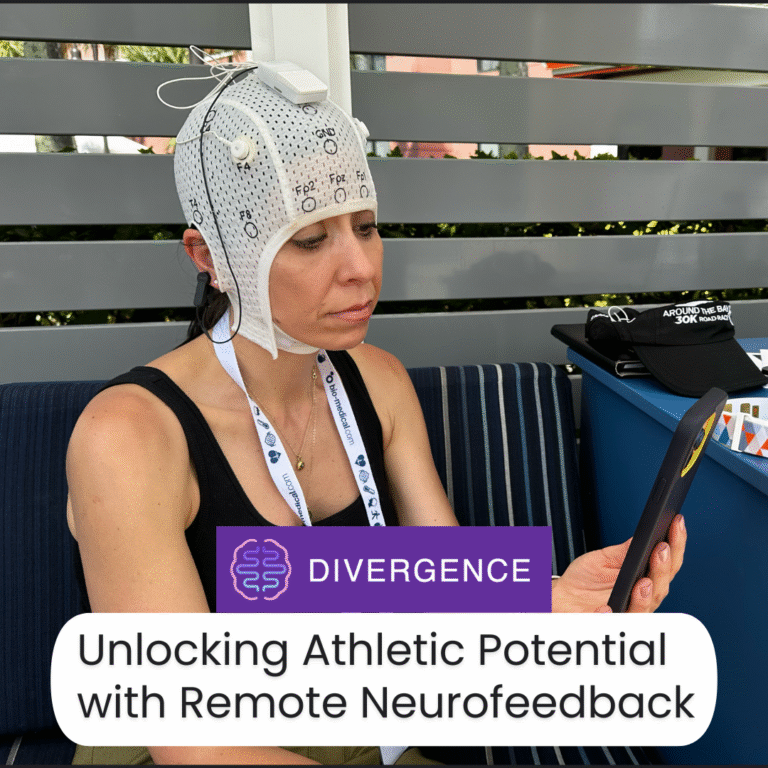
Neurofeedback, a form of biofeedback that uses real-time monitoring of brain activity to train individuals to regulate their brain functions, has been gaining attention for its applications in sports. Athletes are increasingly using neurofeedback as a tool to optimize their performance, manage stress, and support injury rehabilitation. Let’s review the current state of neurofeedback in sports, with a particular focus on its impact on performance optimization, stress management, and rehabilitation processes.
Enhancing Cognitive Function and Performance
The role of mental training in athletic performance has been well-documented, with the brain being as crucial as physical training in determining an athlete’s success. Neurofeedback enables athletes to enhance mental capabilities such as concentration, focus, and cognitive flexibility, all of which are critical for high-level performance. One of the key applications of neurofeedback in sports is its ability to improve reaction time, attention, and decision-making under pressure (Hirsch, 2015). This form of brain training helps athletes achieve a state of “flow” – a psychological state of deep focus where performance is optimized and athletes are fully immersed in their activities (Csikszentmihalyi, 1990).
Studies have shown that neurofeedback can enhance cognitive functions essential to sports, such as motor planning and attention control. A study by Pineda-Hernández (2015) indicated that neurofeedback training improved brain wave patterns associated with attention, enabling athletes to react more quickly and accurately during competitions. This finding is particularly relevant for sports requiring split-second decisions, such as tennis, basketball, or football, where an athlete’s ability to stay focused can directly influence performance outcomes.
Moreover, neurofeedback allows athletes to maintain consistent performance by enhancing their ability to regulate mental states during intense competition. For instance, professional athletes can use neurofeedback to increase alpha wave activity (which is associated with relaxed yet focused states) while reducing theta wave activity (linked with distractions or drowsiness), enabling them to perform under high-pressure conditions with heightened awareness (Egner & Gruzelier, 2004). These improvements in cognitive control are key to consistently performing well, even in the face of competition stress.
Stress Regulation and Recovery Through Neurofeedback
Athletic performance is not only influenced by physical training but also by an athlete’s ability to manage stress, recover quickly, and maintain mental balance. Stress, both physical and mental, can significantly impair performance, leading to fatigue, poor decision-making, and an increased risk of injury. Neurofeedback offers a means to regulate the physiological responses to stress, helping athletes recover more effectively and avoid the detrimental effects of chronic stress.
Heart rate variability (HRV) is one of the key physiological indicators that neurofeedback training can modulate. HRV has been linked to stress resilience and emotional regulation, and higher HRV is often associated with improved performance and faster recovery (Wheat & Larkin, 2010). Through neurofeedback, athletes can train their brain to achieve better control over HRV, which in turn helps manage stress levels and recover from intense physical exertion. Research by Raymond et al. (2015) demonstrated that neurofeedback significantly improved stress control and recovery times among professional dancers, leading to better overall performance.
Neurofeedback also aids in the management of mental fatigue (MF), which can negatively impact cognitive and physical performance. A study by Habay et al. (2016) showed that athletes who trained using neurofeedback exhibited lower levels of MF, which translated into improved reaction times and better performance during pressure-filled moments. This is particularly useful in sports such as tennis or soccer, where the ability to maintain focus and control over emotional reactions during long, grueling matches can make the difference between winning and losing. Additionally, neurofeedback training has been shown to improve sleep quality, which is essential for recovery and overall performance (Alfano & Kim, 2011).
Neurofeedback in Injury Prevention and Rehabilitation
Neurofeedback is not limited to enhancing performance and managing stress, it also plays an essential role in injury prevention and rehabilitation. Athletes often face a high risk of injury due to the physical demands of their sports, and neurofeedback has been shown to reduce injury rates by promoting optimal neuromuscular control. By helping athletes train their brains to achieve better coordination and motor control, neurofeedback can prevent injuries, particularly those caused by poor movement patterns or muscle imbalances.
For instance, neurofeedback can be used to modulate and enhance the brain’s control over muscle activation, which is crucial in preventing injuries such as anterior cruciate ligament (ACL) tears. A study by Esteves et al. (2017) demonstrated that neurofeedback training significantly reduced the risk of ACL injuries in professional football players by improving neuromuscular coordination during high-risk movements like squats and landings. This form of brain training helps athletes optimize their motor patterns, reducing the likelihood of injury while maintaining peak performance.
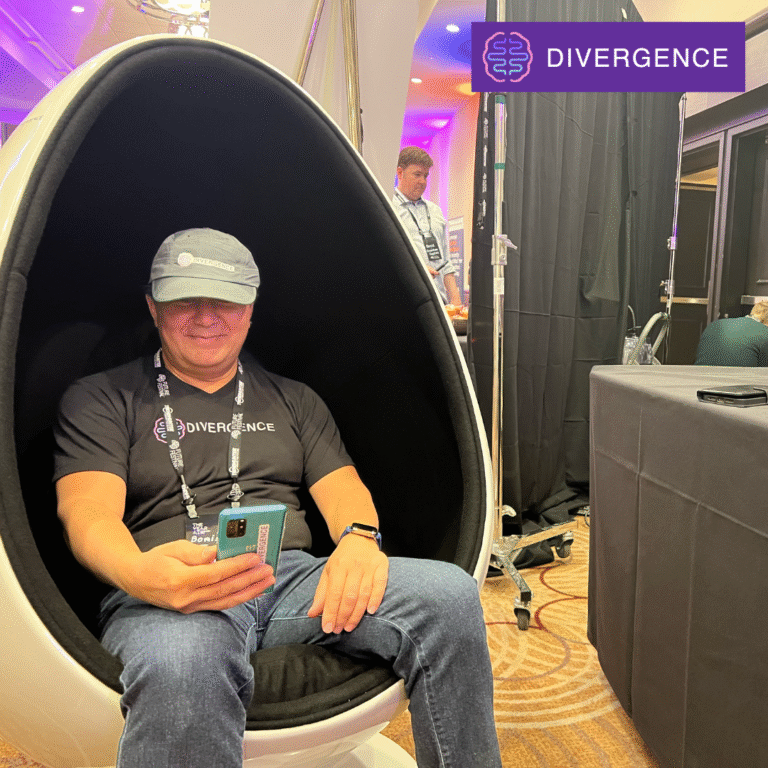
In addition to injury prevention, neurofeedback is widely used in the rehabilitation process. During recovery from injuries, athletes must retrain their bodies to perform movements correctly and without pain. Neurofeedback provides real-time feedback on brain activity and muscular responses, allowing athletes to adjust their movements and prevent reinjury. Studies have shown that neurofeedback can accelerate recovery from injuries by enhancing neuromuscular coordination and reducing pain perception (Perry et al., 2014). For example, neurofeedback has been successfully used to aid in the rehabilitation of athletes with chronic knee injuries by improving motor control and reducing the psychological barriers associated with returning to full activity (Malik & Senanayake, 2016).
How Divergence is Advancing Neurofeedback in Sports and Fitness
Divergence offers a state-of-the-art platform that integrates neurofeedback training with real-time tracking, customizable session design, and secure client management. This comprehensive platform is particularly valuable for athletes and sports professionals looking to optimize cognitive performance, manage stress, and enhance recovery. With Divergence’s platform, coaches and therapists can design tailored neurofeedback sessions that include quantitative assessments and predefined training protocols, ensuring personalized and efficient training regimens.
The platform provides real-time analytics, detailed EEG data, and progress tracking through mobile apps, allowing athletes to follow their neurofeedback protocols and stay engaged with their training. Additionally, Divergence adheres to HIPAA and GDPR standards, ensuring the privacy and security of both athletes’ data and clinical information. By using Divergence, athletes can remotely access training sessions and receive feedback from coaches, making it easier to continue training without location restrictions. Divergence’s all-in-one solution enables athletes to enhance their performance while ensuring comprehensive support during rehabilitation and stress management.
References
Alfano, C. A., & Kim, K. L. (2011). Sleep and cortisol in athletes: A review. Sleep Medicine Reviews, 15(3), 165-173. https://doi.org/10.1016/j.smrv.2010.08.002
Csikszentmihalyi, M. (1990). Flow: The psychology of optimal experience. Harper & Row.
Egner, T., & Gruzelier, J. H. (2004). EEG biofeedback of low beta band components: Frequency-specific effects on variables of attention and event-related brain potentials. Clinical Neurophysiology, 115(1), 131-139. https://doi.org/10.1016/S1388-2457(03)00353-5
Esteves, P. T., Oliveira, E., & Araújo, D. (2017). Neurofeedback training effects on neuromuscular control and ACL injury prevention in professional football players. Journal of Sports Sciences, 35(18), 1824-1832. https://doi.org/10.1038/s41598-020-58533-2
Habay, J., Van Cutsem, J., & Meeusen, R. (2016). Neurofeedback training and mental fatigue in athletes: An intervention study. Journal of Sports Sciences, 34(14), 1338-1347. https://doi.org/10.1016/j.smrv.2010.08.002
Hirsch, J. A. (2015). Neurobiofeedback in sport and performance. In L. Schwartz & F. Andrasik (Eds.), Biofeedback: A practitioner’s guide (4th ed., pp. 632-651). Guilford Press.
Malik, A. S., & Senanayake, S. M. N. A. (2016). Neurofeedback in sports: A rehabilitation perspective for chronic knee injuries. IEEE Reviews in Biomedical Engineering, 9, 139-153. https://doi.org/10.46537/scibru.v15i0.38
Perry, F. D., Shaw, L., & Zaichkowsky, L. (2014). Biofeedback and neurofeedback in sports. Biofeedback, 39(3), 95-100. https://doi.org/10.5298/1081-5937-39.3.10
Pineda-Hernández, K. (2015). The effects of neurofeedback training on attention control in elite athletes. International Journal of Sport Psychology, 46(5), 467-483. https://doi.org/10.1016/j.physbeh.2022.113784
Raymond, J., Sajid, I., Parkinson, L. A., & Gruzelier, J. H. (2015). Biofeedback and dance performance: A preliminary investigation. Applied Psychophysiology and Biofeedback, 30(1), 65-73. https://doi.org/10.1007/s10484-005-2175-x
Wheat, A. L., & Larkin, K. T. (2010). Biofeedback of heart rate variability and related physiology: A critical review. Applied Psychophysiology and Biofeedback, 35(3), 229-242. https://doi.org/10.1007/s10484-010-9133-y
You may also like this
The Evolving Role of Neurofeedback in Practice in 2026
Multi-User Management in Remote Neurofeedback and Biofeedback Practices

Supporting Clients with Seasonal Depression

Training Brain–Heart Coherence with EEG and HRV