Transform Your Practice with the Power of Neurofeedback and Biofeedback

In today’s fast-paced, high-stress world, mental health concerns such as anxiety, depression, ADHD, and insomnia are on the rise, and traditional approaches often fall short of providing lasting relief. Neurofeedback and biofeedback are innovative, evidence-based therapies that are revolutionizing how we address mental wellness. As these therapies grow in popularity, both in-office and remote solutions are providing patients with new opportunities for healing and self-regulation.

But what exactly are these therapies, and how can they fit into your clinical practice?

What Are Neurofeedback and 

Biofeedback?

At their core, neurofeedback and biofeedback are therapies that provide real-time feedback on brain activity and physiological responses, enabling patients to train their bodies and minds to regulate stress and emotional responses more effectively.

Neurofeedback uses EEG (electroencephalogram) sensors to monitor brain activity, allowing patients to gain insights into their brainwave patterns. With this information, patients can learn to optimize their brain activity, leading to improvements in cognitive function, emotional regulation, and mental clarity.

Biofeedback, on the other hand, provides feedback on bodily functions such as heart rate, muscle tension, and skin temperature. By learning to control these physiological responses, patients can reduce stress and manage physical symptoms tied to mental health issues.

Both approaches empower patients to take control of their mental and physical health without the use of invasive treatments or medications.
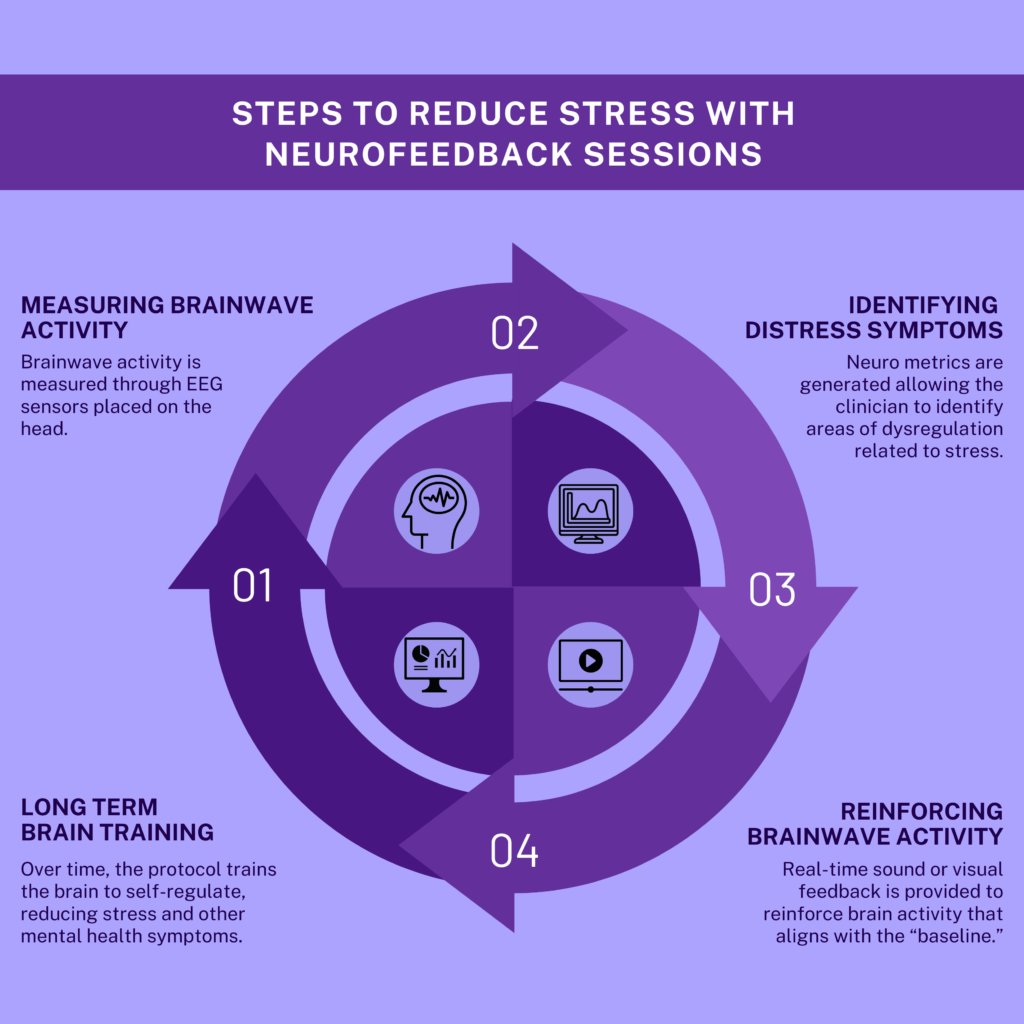
Steps to reduce stress with neurofeedback sessions

How Neurofeedback Can Benefit Your Clinical Practice

As a therapist, adding neurofeedback to your practice can dramatically enhance the way you support your clients’ mental wellness. Neurofeedback provides a non-invasive, drug-free treatment option that targets the root causes of many mental health conditions, such as brainwave dysregulation. This allows for long-lasting change, not just temporary symptom relief.

Neurofeedback helps treat common conditions like:

  • Anxiety
  • Depression
  • ADHD
  • PTSD
  • Insomnia

Research has shown that neurofeedback can bring about lasting changes in brain functioning, promoting more balanced emotional responses, improved cognitive abilities, and overall mental clarity (Hengameh et al., 2016; Pani et al., 2018). By incorporating neurofeedback, you can offer a personalized and sustainable solution to your clients, addressing the underlying causes of their struggles and providing them with the tools to thrive.


Creating a Remote Neurofeedback Program

Remote neurofeedback is transforming therapy for both clinicians and patients, offerings the convenience of at-home sessions with real-time feedback and clinician oversight. If you’re considering adding it to your practice, it’s important to create a structured, manageable program. Here are some steps to get started:

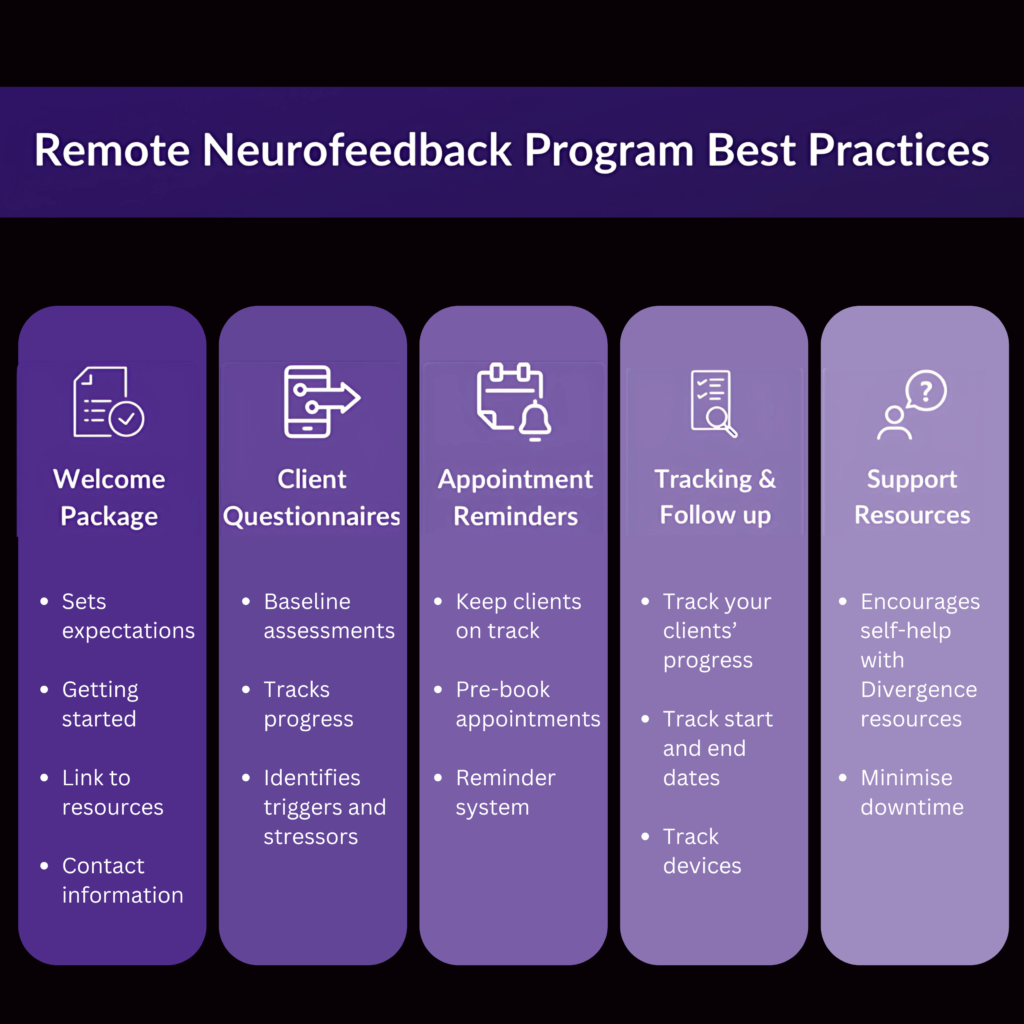
Remote Neurofeedback Program Best Practices
  • Create a Welcome Package: Set expectations and provide clients with clear guidelines on what to expect, including the session structure, missed session policies, and the equipment they’ll need.
  • Client Questionnaires: Use questionnaires to track client progress. These tools give you insight into their emotional state, stressors, and successes, both qualitative and quantitative.
  • Set Appointment Reminders: Automated reminders through your calendar or client management software will ensure your clients stay on track with their sessions.
  • Track Progress: Monitor both client data and their subjective feedback to evaluate treatment effectiveness and adjust as needed.
  • Provide Ongoing Support: Familiarize yourself with common technical issues and solutions to ensure your clients feel supported every step of the way.

By creating a well-organized and proactive remote neurofeedback program, you’ll be able to offer your clients a seamless experience, ensuring they stay engaged and committed to their mental wellness journey.


How to Add Neurofeedback to Your Practice

Adding neurofeedback to your clinical practice may seem like a daunting task, but with the right approach and resources, it’s a straightforward process. Here’s a guide to help you get started:

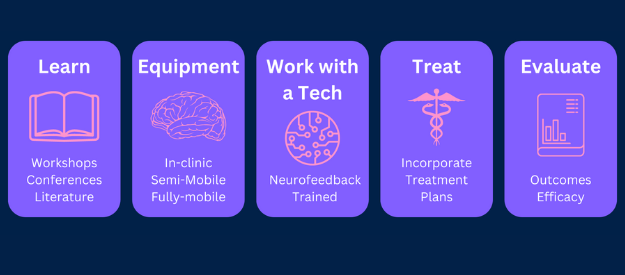
  • Education and Training: The first step is to learn about neurofeedback and its applications. Attend workshops, conferences, and consider enrolling in certification programs. Some well-regarded conferences include the AAPB Annual Conference, ISNR Annual Conference, and BFE Annual Conference. Additionally, explore courses offered by neurofeedback professionals and platforms like TrueBearing Academy for comprehensive training.
  • Choose Your Equipment: Neurofeedback devices range from high-end in-clinic equipment to portable, consumer-friendly options. Depending on your budget and the scope of services you want to offer, you can select equipment that suits your needs. There are options for both in-office and remote neurofeedback:
    • High-end equipment: $50,000, best for complex in-office sessions.
    • Mid-range devices: $1,000-$10,000, perfect for remote sessions.
    • Portable devices: Starting at $200, ideal for simpler remote training.
  • Work with a Technician: If you’re new to neurofeedback, it’s helpful to work with a certified neurofeedback technician who can guide you through setup and operations, especially with more sophisticated equipment.
  • Incorporate Neurofeedback into Treatment Plans: Once you have the right equipment and expertise, begin integrating neurofeedback into your clients’ treatment plans. Neurofeedback works well for clients who are struggling with conditions like anxiety, ADHD, and trauma. Collaborate with your clients to set specific goals for their sessions and track their progress over time.
  • Evaluate Outcomes: Use standardized measures and client feedback to assess the effectiveness of neurofeedback. This will help you ensure that the therapy is providing the desired results and enable you to make any necessary adjustments.

By adding neurofeedback to your practice, you’re opening the door to a more holistic, innovative approach to mental health care that addresses the root causes of your clients’ struggles and offers sustainable relief.

The Growing Role of Remote Neurofeedback Solutions

Remote neurofeedback offers several key advantages for both clinicians and patients. The convenience of completing sessions from home improves patient adherence, reduces the time and cost of travel, and allows for greater flexibility in treatment scheduling.

With tools like the Neurosity Crown and BrainBit Flex, remote neurofeedback has become more accessible and effective than ever. These wearable, wireless devices provide high-quality EEG data, allowing clinicians to track and adjust their patients’ brain activity in real time.

Key Benefits of Remote Neurofeedback:

  • Flexibility: Patients can complete sessions at their convenience, improving adherence and engagement.
  • Increased Accessibility: Remote neurofeedback reaches clients in underserved areas or those with mobility issues.
  • Cost-Effectiveness: Eliminating travel and overhead costs makes the therapy more affordable for both patients and clinicians.
  • Real-Time Adjustments: Clinicians can make adjustments to treatment based on live data, enhancing therapy outcomes.

Remote neurofeedback isn’t just a convenience; it’s a way to provide better, more accessible care to those who need it most.


Is Neurofeedback Safe and Effective?

Yes, neurofeedback is safe, non-invasive, and well-tolerated by most patients. It’s effective in addressing a variety of mental health issues, including anxiety, depression, PTSD, ADHD, and insomnia. By addressing brainwave dysregulation, neurofeedback helps clients re-train their brains to work more efficiently, leading to long-term improvements in both emotional and cognitive functioning.

Why Leading Clinicians are Choosing Divergence

Divergence

Leading Provider

Easy to Use
Remote or In-Clinic
Protocol Packages
Audio and Video Feedback
Dry Electrode Options
5-minute Neuro Assessment
Signal Strength Measures
Ability to Download Data

Request Your Free Guide Now!

Curious to learn more? Claim your copy of our Guide to Pricing and Marketing Remote Neurofeedback Programs.

Speak to Us One-on-One

Want to speak with one of knowledgeable staff one-on-one to learn more about how neurofeedback could benefit you and your practice? Fill out the form below and someone will be in contact with you to schedule a call shortly.

© Copyright 2022 Divergence Neuro Technologies Inc.